

You Can't Improvise Your Way to Excellence

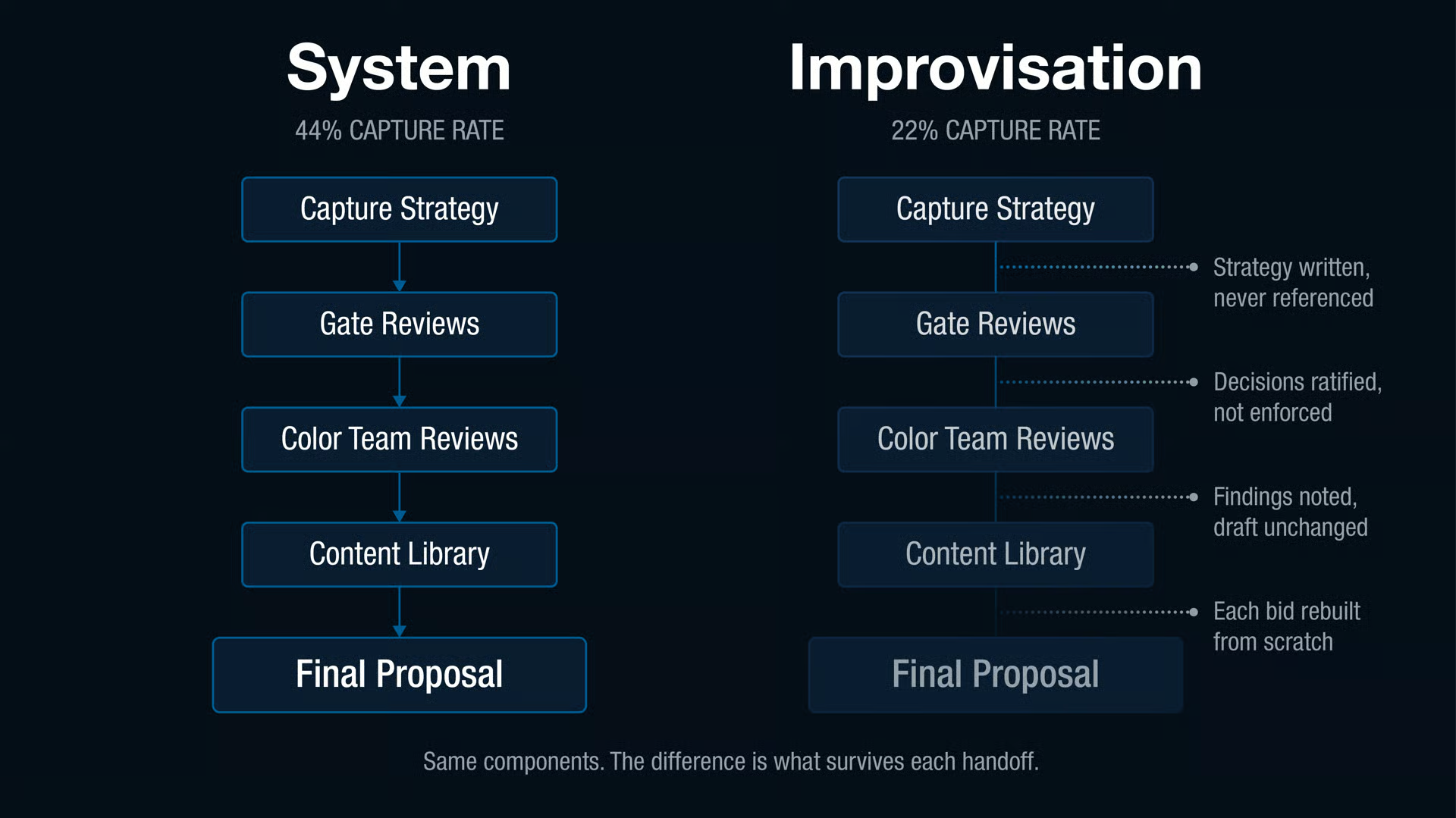
The organizations consistently outperforming their market have a competitive capability, not just a proposal department. The difference between a 22% capture rate and a 44% capture rate often comes down to whether proposal development runs as a system or gets rebuilt from scratch under pressure every time an RFP drops.
Two Organizations. Same Market. Very different Numbers
Take two similarly sized GovCon firms competing in the same federal market. Same customer base. Roughly comparable past performance portfolios. Both have been in business for 15-plus years. One wins around 22% of what it bids. The other wins around 44%.
The difference may not be technical capability. It may not be relationships. It may not be pricing strategy, though that is a factor. The consistent differentiator between organizations at those two capture rate levels is whether they have treated proposal capability as something to be built and measured, or as something to be improvised under pressure.
That gap is wider than most BD leaders think. And it does not close on its own.
What Proposal Maturity Actually Looks Like
BD maturity models measure the same underlying truth from different angles: organizations that execute business development through repeatable, disciplined processes outperform organizations that rely on individual talent and institutional improvisation. The capability maturity research consistently shows that moving from reactive, post-RFP focus to proactive, process-driven capture and proposal management roughly doubles effectiveness in securing new business.
At the lower maturity levels, proposals are events. The RFP drops, resources get scrambled, heroics happen, something gets submitted. Capture rates are volatile because they are talent-dependent. When key people leave, the institutional knowledge walks out with them. Lessons learned reviews, if they happen at all, do not change behavior because there is no process to change.
At higher maturity levels, proposals are outputs of a system. Capture intelligence feeds into proposal strategy. Writers have storyboards and content plans before they draft. Color team reviews are structured to surface real problems, not rubber-stamp a draft. Win themes connect to customer priorities identified in capture, not to capabilities the proposal team finds easiest to write about. Metrics exist, are tracked, and actually inform decisions about where to invest.
The difference is not that higher-maturity organizations have better writers. They often have the same writers. They have built the infrastructure that makes those writers' work more effective.
The Metrics Problem
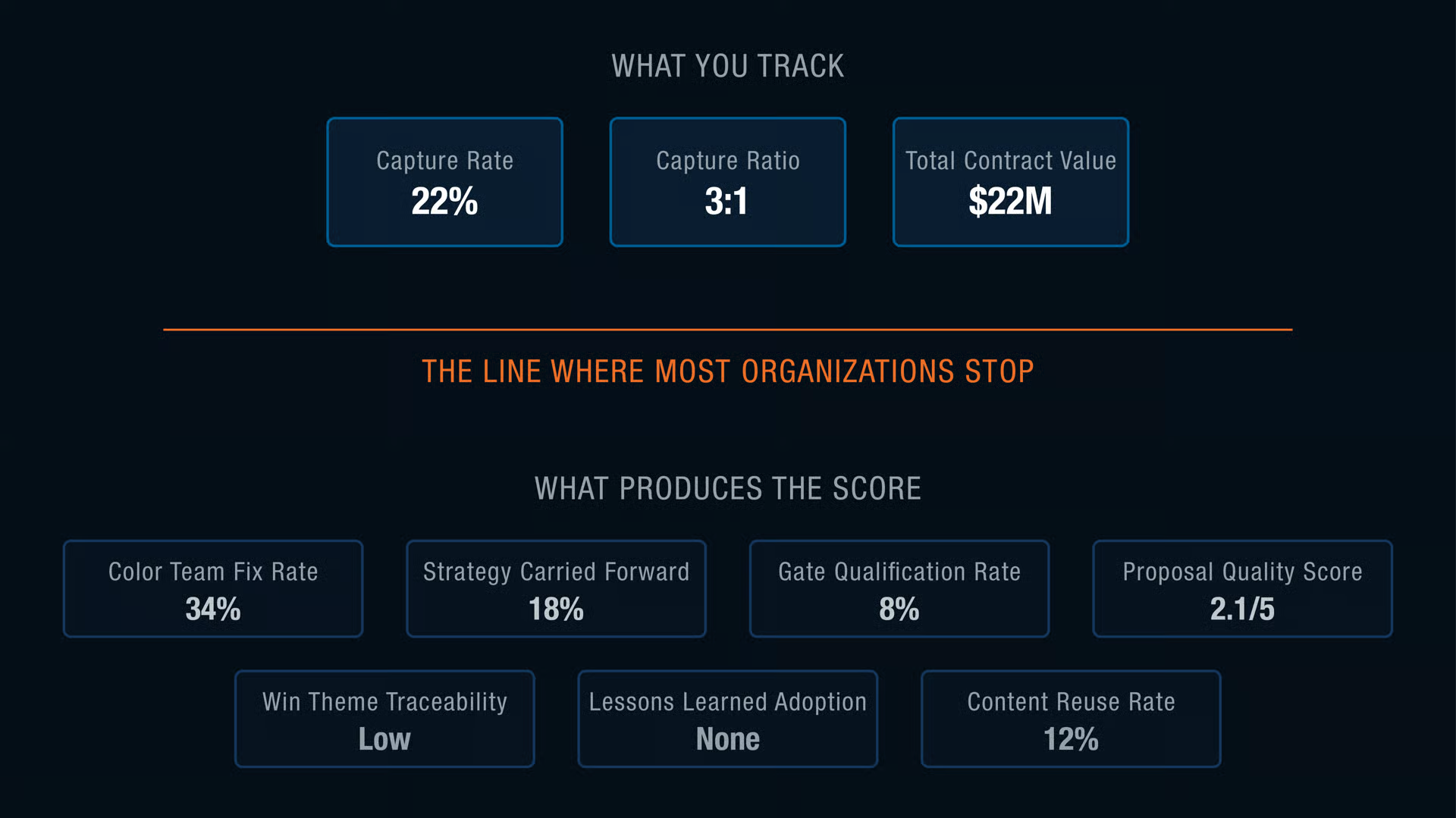
Most BD organizations measure trailing indicators: capture rate, capture ratio, total contract value won. Those numbers tell you how you did. They do not tell you why, or what to do differently.
The organizations that improve consistently also track diagnostic metrics. Proposal quality scores against defined criteria. The gap between what color teams flag and what gets fixed before submission. Whether win strategies developed in capture actually show up in the final proposal, or whether the proposal team starts over. How often bid decisions at gate reviews are genuine decisions versus ratifications of something already committed.
That second tier of metrics is uncomfortable. It surfaces the places where process breaks down, where accountability is fuzzy, where the gap between what the organization says it does and what it actually does is visible. That is exactly why it is valuable. Organizations that only track trailing indicators are always reacting to the score. Organizations that track diagnostic metrics are managing the factors that produce the score.
If you want an objective read on where those gaps sit in your organization, Shipley's Win Rate Diagnostic benchmarks your BD, capture, and proposal performance against top performers and gives you a prioritized roadmap.
The Investment Conversation Leaders Avoid
BD capability does not improve through effort alone. Writing harder on the same infrastructure produces the same results, faster and with more burnout.
The organizations that move their capture rate from 22% to something north of 35% make deliberate investments. Corporate training that builds shared vocabulary and consistent process across capture and proposal teams. Structured color team review protocols that reviewers actually know how to execute. Content libraries that capture institutional knowledge before it walks out the door. Proposal managers with enough real process training to build and manage a PMP rather than just track a deadline.
None of that is cheap. But the cost calculation is straightforward if you are willing to run it. At a 22% capture rate, an organization submitting $100M in bids wins roughly $22M. At a 35% capture rate on the same bid volume, that is $35M. The delta funds a lot of training and process investment.
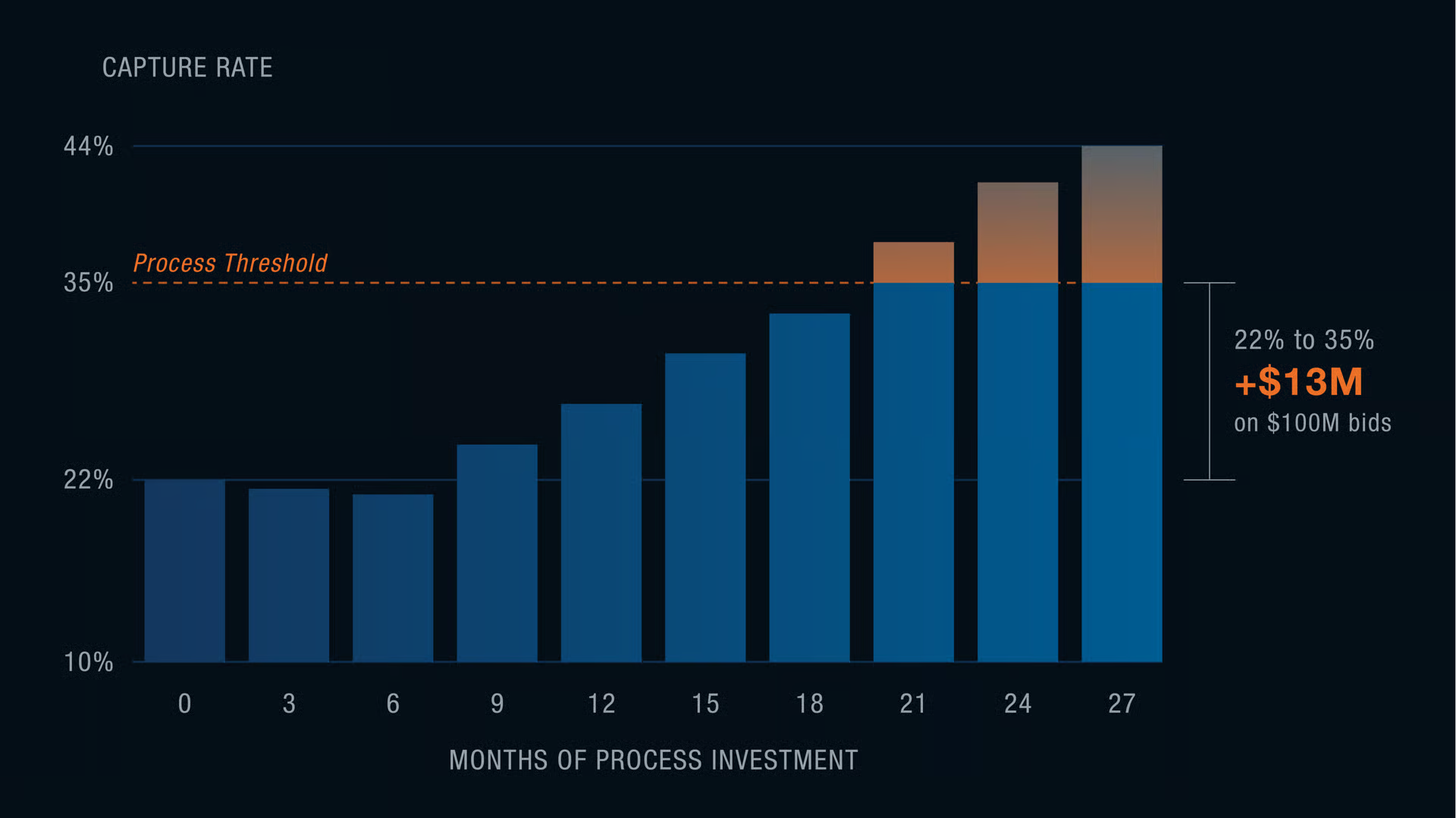
Most BD leaders know this math. The challenge is usually the timeline. Capability improvements take 12 to 18 months to show up in capture rate data. Leadership wants faster signals. That is a real tension. But it is also an argument for starting sooner rather than waiting for a bad stretch to force the conversation.
Shipley's corporate training programs are built around exactly this transition, building the shared process, vocabulary, and execution discipline that separate high-maturity BD organizations from those still running on heroics.
The Case for Treating This as a Strategic Asset
Organizations that consistently outperform their market do not have a proposal department. They have a competitive capability. Their BD and proposal professionals are seen as a strategic asset rather than a support function. That framing changes how the organization invests, how it retains talent, and how it positions proposal work internally.
If you are a BD executive or proposal center leader who has been running hard on the same infrastructure for a while, the question worth sitting with is this: what would it take to move from improvisation to system?
When a must-win is on the horizon and the capability gap is real, Shipley's embedded consultants plug in fast, with proposal managers, capture advisors, writers, and orals coaches who know the work and hit the ground running.
How can Shipley assist with your current challenges? Get the conversation started.
Let us Help You Win
Whether you need training or consulting support to facilitate your next win, click one of the options below and let's get started.
