

Rapid-Response Organizational Readiness - Part 1
Readiness as a Competitive Advantage
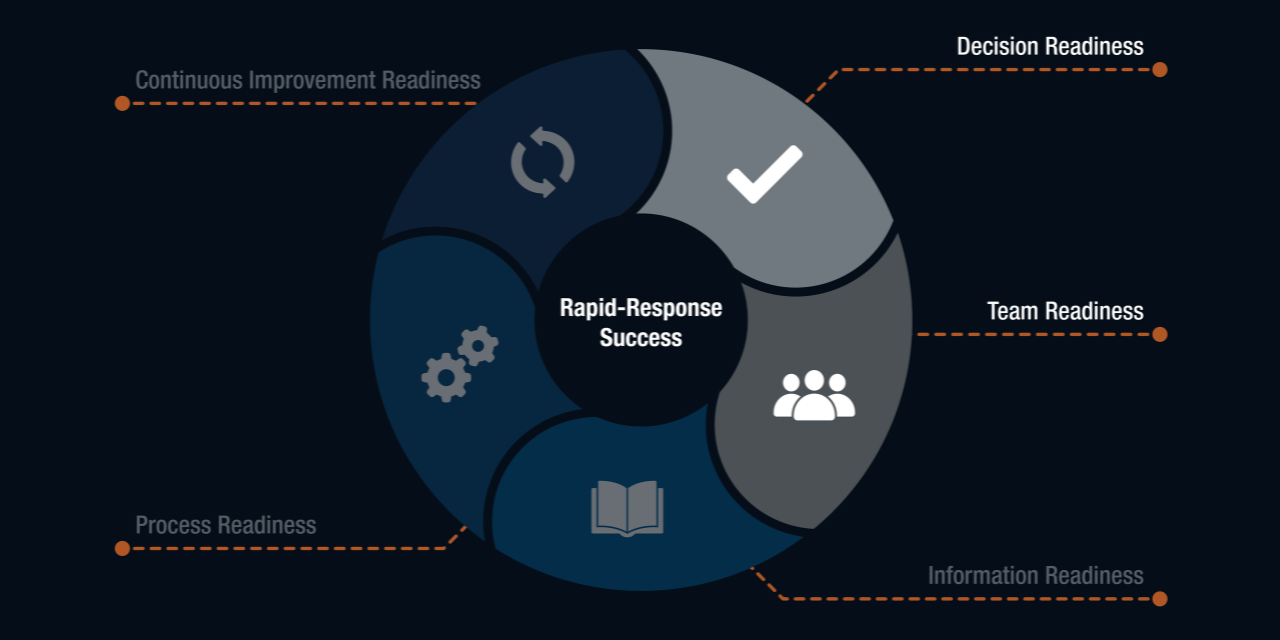
This series presents a practical framework organized around five dimensions of readiness: decision readiness, team readiness, information readiness, process readiness, and continuous improvement readiness. Together, these dimensions provide leaders with a foundation for improving responsiveness without sacrificing quality.
This issue covers the first two dimensions, decision readiness and team readiness.
Rapid-response opportunities often expose weaknesses that remain hidden during longer pursuits. Organizations may possess experienced proposal managers, capable capture professionals, and strong technical teams, yet still struggle under compressed schedules because they lack the infrastructure necessary to support rapid execution. Delays frequently occur not because people lack talent, but because information is difficult to locate, responsibilities are unclear, approval authority is uncertain, or execution processes vary from one opportunity to the next.
As acquisition timelines continue to compress, readiness becomes increasingly important. Organizations no longer have the luxury of using proposal schedules to compensate for weaknesses in decision-making, coordination, information management, or process execution. Teams that spend valuable days collecting information, determining responsibilities, or resolving procedural questions often discover that they have little time remaining to focus on proposal quality, customer priorities, or competitive differentiation.
Organizations that consistently perform well under pressure reduce these sources of friction before opportunities arise. They establish common expectations, maintain accessible information, clarify authority, and create an environment where contributors can act with confidence. While readiness does not guarantee success, a lack of readiness almost always reduces probability of win. Leaders who understand this relationship can make more informed investments in the capabilities that support long-term growth.
Get training for your team on Rapid Response and many other topics. Let's start with a call to discuss your gaps.
1. Decision Readiness
Decision readiness forms the foundation of organizational responsiveness. Before capture plans can be executed, proposal teams mobilized, or solutions refined, leadership must determine whether an opportunity deserves pursuit. Organizations that struggle to evaluate opportunities quickly often lose valuable time before proposal development even begins. Delays in decision-making can compress already aggressive schedules and create unnecessary pressure throughout the organization.
This challenge frequently appears on multiple-award contracts, IDIQ vehicles, and task-order environments. Because competition is limited to a smaller pool of eligible contractors, many organizations feel compelled to pursue nearly every opportunity that becomes available. While vehicle access may increase the attractiveness of an opportunity, eligibility alone does not create a high probability of win. Opportunities that were not identified, qualified, or influenced through normal business development activities often represent bluebird pursuits, regardless of how limited the competitive field appears.
High-performing organizations evaluate these opportunities using the same discipline applied to any other pursuit. Customer relationships, solution maturity, competitive positioning, resource availability, and probability of win all influence the decision. They recognize that every pursuit consumes finite resources, including proposal staff, capture personnel, subject matter experts, and executive attention. Pursuing low-probability opportunities can prevent organizations from responding effectively when stronger opportunities emerge.
Organizations can improve decision readiness by establishing consistent qualification criteria, applying realistic probability-of-win assessments, and evaluating opportunities within the context of the broader opportunity portfolio. These practices help leaders allocate resources more effectively while avoiding pursuit overload. Once leaders determine which opportunities warrant investment, the next challenge becomes mobilizing the right people quickly enough to execute. That capability is the foundation of team readiness.
If your team is still deciding whether to chase every eligible opportunity, our Qualifying to Win course teaches the qualification framework these organizations use to filter pursuits before they consume resources.
2. Team Readiness
Many organizations equate staffing with readiness, yet personnel availability alone does not guarantee successful execution. In reality, readiness depends on whether people understand their roles, responsibilities, authority, and relationships with other functions before a pursuit begins. Even highly capable teams can struggle when contributors spend valuable time determining who should make decisions, approve actions, or resolve conflicts.
Rapid-response opportunities depend on coordination among business development, capture, proposal management, pricing, contracts, finance, recruiting, operations, and executive leadership. When roles are unclear, contributors often wait for guidance rather than taking action. Small delays quickly compound, causing bottlenecks that can threaten schedule performance and reduce proposal quality.
Organizations with strong team readiness establish authority and expectations before opportunities emerge. Contributors understand where they fit within the pursuit process and can begin working immediately when opportunities appear. Clear escalation procedures help teams resolve issues quickly, while defined decision rights prevent unnecessary delays. As a result, organizations spend less time coordinating activity and more time executing it.
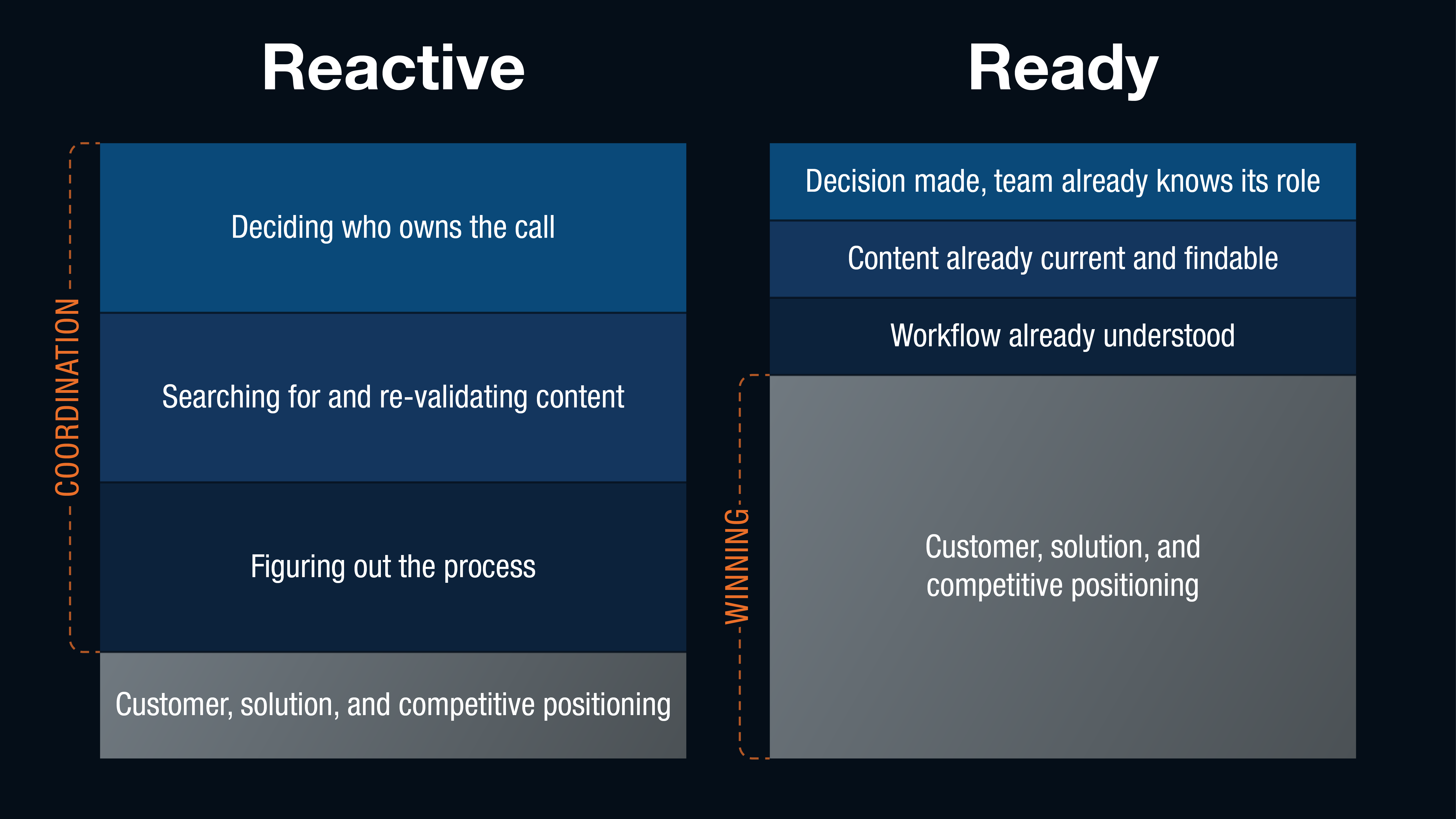
Leaders seeking to improve team readiness should focus on reducing ambiguity. Clearly defined responsibilities, communication expectations, and decision boundaries create an environment where teams can respond quickly without sacrificing accountability. Once teams are prepared to act, they must have access to the information required to make effective decisions. That requirement brings information readiness into focus.
When roles and decision rights are still being worked out mid-pursuit, our Capture Advisors provide the strategic guidance and coordination structure these organizations put in place ahead of time.
Part 2 of this series covers the remaining three dimensions, information readiness, process readiness, and continuous improvement readiness, and closes out the series with the central argument tying all five together: the work happens in the weeks nobody notices, long before an active pursuit ever starts.
Let us Help You Win
Whether you need training or consulting support to facilitate your next win, click one of the options below and let's get started.
